
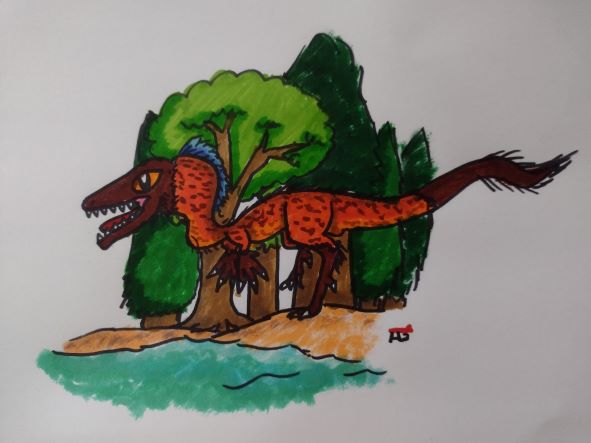
Juravenator is one of those dinos you’ve never heard of, and nobody really knows that much about it. Juravenator was a theropod dinosaur that lived in the Middle Jurassic in Germany, back in the time of the first birds, Archeopteryx. Indeed, it is assumed to be a compsognathid, a group of theropods that were generally tiny (about the size of a large chicken or small turkey) and bird-like. Compsognathus is generally known for being the world’s smallest dino, however, other dinos have stolen this spot, such as the related Anchiornis and possibly another relative Parvicursor.
Juravenator means ‘Jurassic hunter’, but it was so small that all it would have hunted were insects. It’s evolutionary history and classification is a bit murky, but most dinos are like that, so no surprise here. Juravenator is generally classified as a compsognathid and shared a habitat with its presumed cousin Compsognathus and the first bird Archeopteryx. The only specimen that we have has been found to be a juvenile. Some studies indicate that it was nocturnal because of the orbits (eyeholes) in the skull, although this may be due to it being a juvenile.
Juravenator has been classified as a maniraptoran, the group that birds and raptors belong to, and it is being hotly discussed whether compsognathids are in the Maniraptora or are a sister group. Juravenator has also been classified as a juvenile megalosauroid, a group of large theropods that also rose in the Middle Jurassic and were the ancestors of spinosaurs like our previous guest Ichthyovenator. With this series of articles, I think that we have truly learned that nothing in paleontogy is really certain.

 Anay Ganesh