
The Mahabharata is one of the cornerstones of Hindu mythology and I have talked about it a LOT in this blog. So starting today, I will summarize this great epic in short snippets, so let’s go to the beginning.
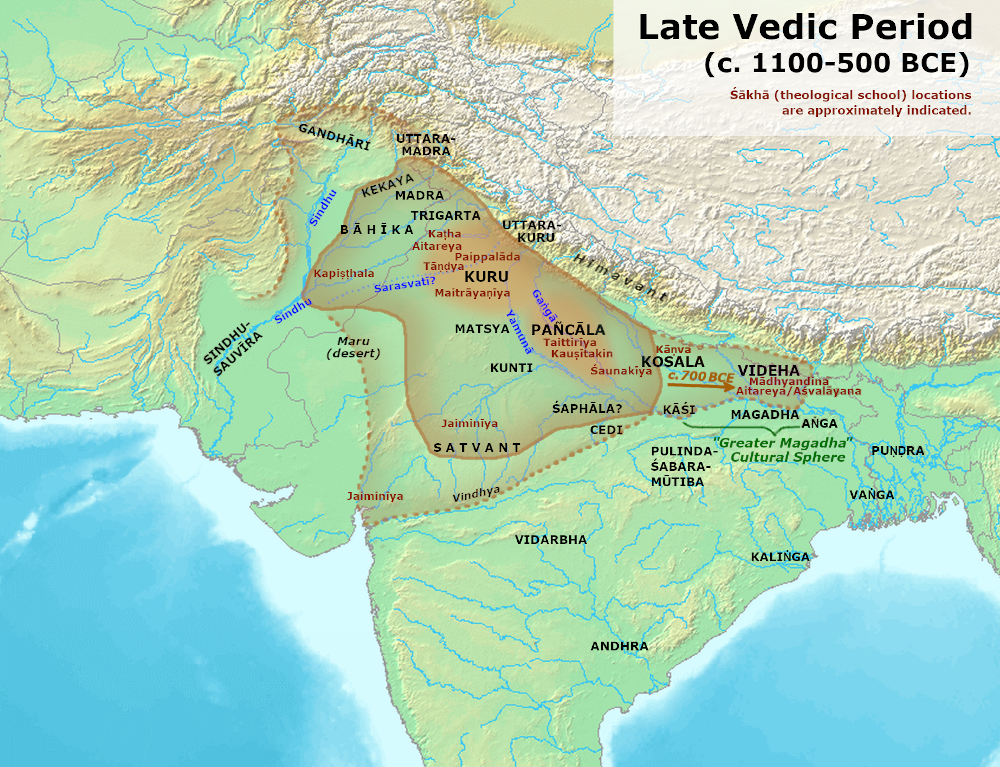
Our story starts with Shantanu, the king of the Kuru kingdom. Once, when Shantanu went hunting, he met a beautiful, heavenly woman on the side of the River Ganga. Unknown to him, this was the river goddess herself. Shantanu fell in love at first sight and asked her to marry him. (bit fast, no?) The goddess Ganga agreed on one condition, that Shantanu should never question her actions. Again, a red flag, but Shantanu surprisingly agreed. Unfortunately, he was what we call a simp in the 21st century.
Ganga had 8 children with Shantanu. Each time the baby was born she would take it to the river and drown it. This continued on seven times until the eighth child was born, where Shantanu finally came to his senses and told Ganga to not drown the child. She then revealed her true form, told him a story, and promptly ascended back to the realm of the celestials along with her kid.
The eight Vasus, the attendants of Vishnu and the gods of the elements, were walking through a forest. The wife of Dyaus or Prabhasa, the Vasu of ether, saw a beautiful cow that she wanted to keep, so she asked her husband and brothers-in-law to steal it for her. The heist was conducted successfully, but they were caught soon after by the sage Vasishta, to whom the cow (Kamadhenu) belonged to. Vasishta cursed the eight Vasus to take mortal form on earth, but decreed that seven of them would be liberated at birth after they begged for mercy. Prabhasa, however, would live a long time. As a compromise, he would be regarded as a wise and virtuous man by his people. They would all be born to Ganga, who was also cursed to take earthly form from a previous escapade with Shantanu’s previous incarnation.
In the present, Shantanu moped around for a while, missing his wife and child. One day, though, he found his son Devavrata while walking by the Ganga and noticing that the water level was lower than usual. It turned out that his son had blocked the water with his weapons. They were reunited and the prince was reinstated as heir to the Kuru clan. Not for long though, for Shantanu found love yet again in the form of the fisherwoman Satyavati. Satyavati’s son from a previous relation with a sage, Krishna (the dark-skinned) Dwaipayana (island-born) Vyasa, was the author of the entire epic. Well, according to the epic itself. No one knows if Vyasa exists or not. Anyway, Satyavati’s father agreed to her and Shantanu’s marriage on a condition: Satyavati’s sons should inherit the throne and not Devavrata. Shantanu refused, but Devavrata, hearing about this, renounced his claim and took a vow of celibacy, becoming known as Bhishma, one who has taken a terrible vow. Satyavati married Shantanu in the end and they had two sons, Chitrangada and Vichitravirya. Chitrangada fought his namesake the king of the Gandarvas, who were elf-like musicians and warriors allied to the gods, and after three years of fighting was killed, so Vichitravirya became the king with Bhishma as advisor.
Le fin – part II talks about Vichitravirya’s wives, his death, and Vyasa’s interference in the succession crisis.

 Anay Ganesh